
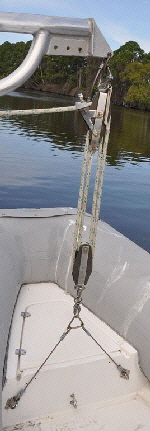
 If you hoist your dinghy on davits you probably use the age-old method of blocks and tackles hanging from each davit. This was how Britannia was set up when I bought her and it required two people to haul the lines to hoist the dinghy eight feet to the davits. Even wearing gloves it always strained mine and my wife’s hands and was interminably slow. It wasn’t any easier to run the lines to winches either because it still needed two people to wind them and was even slower and then there were yards of line to coil and stow. We eventually became weary of this rigmarole, and I decided to do something about it
 I considered fitting two hand-operated trailer winches to mount directly to the davits. This is a relatively cheap method to mechanize the operation but the high gearing of the winches meant it would have been even slower than the tackles. I needed faster lifting not slower, because the dinghy sometimes swayed alarmingly as the boat rocked.
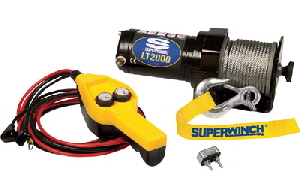
I received inspiration from watching someone at a boat ramp effortlessly haul a power boat onto a trailer using an electric winch, so I decided to try and modify one to hoist my dinghy. There are many different makes available and one I bought was a 12 volt drum winch, rated at 2000Lbs pull, and with a wired remote control. A wireless remote was also available, but I liked the idea of a direct connection with no worries about the batteries in the remote contol going flat with the dinghy half way up or down. We are talking about a boat after all.
 My super powerful hoist now effortlessly hauls the 10-foot 130Lbs RIB to the head of the davits in 20 seconds - even with its 55Lbs outboard attached. It will even hoist me sitting in it— a sort of lift to the aft deck and can be operated by a child. When I first tested the new setup with the outboard attached the dinghy came up so quickly I was so astonished and excited the outboard nearly hit the davit.
When on passage I hoist the outboard on its bracket on the stern rail using the rope operated crane. I will often lift it atill attached to the dinghy when at anchor at night, just to prevent the ossibility of theft. All I do is clip the two lifting lines to the dinghy climb up the transom ladder then press the ‘up’ button, and upshe comes - it really is that quick and effortless.
It certainly is one of my better inventions and a most worthwhile addition to the ease of handling of any boat with davits.
TOOLS AND EQUIPMENT REQUIRED:
I made all the parts myself using tools which most do-it-yourself boaters probably have, and it is not as difficult as it perhaps sounds reading this. The tools needed are:
1.A bench preess drill. This is a necessity to cut the aluminum collar and drill accurate thread tapping holes.
2.A piece of 3/8-inch flat aluminium plate big enough to make the circular dividing collar on the winch drum.
3.Metal cutting hole cutters to make the dividing collar.
4.A scroll saw to shape the divider collar.
5.Pulleys and eye straps to route the lifting line from the winch to the head of the davits.
6.Two lead fishing weights to weigh the lifting lines down to the water.
7.Two stainless wire strops to support the dinghy when on the davits.
MAKING THE WINDING DRUM DIVIDING COLLAR: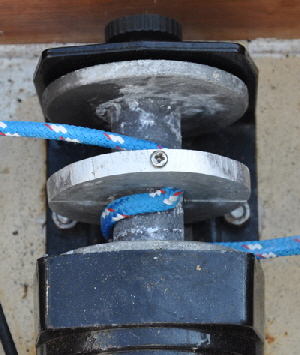 Unlike the single line used on a boat trailer winch a dinghy needs two lifting lines, one from each davit. These lines wind round the electric winch drum either side then pass through pulleys to the end of the davits and down to the dinghy. Since both lines wind round the same drum it is necessary to have a divider collar in the middle to prevent the lines overlapping and tangling. Making the divider is the only ‘engineering’ part of the operation because it needs to be made in two halves to enable it to be bolted to the winch shaft.
I used a small piece of 3/8-inch thick aluminium plate to make the dividing collar. I first sawed it in half using a miter saw fitted with a 60 teeth per inch carbide tipped blade that cuts through aluminium like butter. If I had cut the hole for the winch shaft from a one piece plate then sawed it in half the hole would not be truly circular and not sit properly on the winch shaft.
I clamped the two halves together with my drill vice and marked the 3 1/2inch diameter outside circle of the collar. The diameter of the actual winch drum shaft on my winch was just over 1-inch so still having the two halves clamped together I used a 1-inch metal cutting hole cutter to cut a hole in the middle of the two halves. Then, using drum disks on a Dremel tool I carefully enlarged it to the exact diameter of the winch shaft. A very accurate fit can be achieved by repeatedly offering the two halves to the winch shaft then grinding a little bit at a time. Using a scroll saw with a metal cutting blade I then cut each half of the collar to shape and then had a perfectly round dividing collar in two halves ready to be screwed to the winch drum.
Unfortunately the drum on my winch had a steel shaft running through the middle to operate a clutch to allow the hauling wire on a trailer to be quickly unwound. This prevented my collar halves from being bolted straight though the drum. I held one half collar in my drill vice andI drilled a 3/16-inch hole through the middle of the plate as a pilot to mark the exact hole position on the winch drum. This ensured the hole drilled in the winch shaft would be dead center to the collar hole. I then drilled a 5/32-inch hole in the winding drum and threaded it with a 3/16 tap. I could then bolt the divider half in place using a long machine screw. If you don’t have a tap to make a thread in the winding drum shaft a long self-tapping screw will do he same job. In actual use the collar carries only a little side load as the lifting lines roll up against it
Before actually securing the second half collar on to the shaft I drilled a 1/4-Inch hole the thickness of my lifting line near the inside edge of the collar to allow the line to pass continuously from one side of the collar to the other. I then drilled and tapped the other half collar to form a completely round divider in the middle of the drum shaft. This whole operation did not really take very long but it is worth making the collar as accurate as possible to prevent it wobbling.
SETTING UP THE LIFTING LINES: For the lifting lines I used 1/4-inch braided line that has a breaking strain of over 1400Llbs and considerably stronger than the weight of my dinghy and outboard combined.
The line is first threaded through the hole in the divider collar until it has equal lengths on each side, then one side is wound one turn round the shaft to come out on the other side of the winch. The winch will now wind the lines round both halves of the drum and feed in and out according to the rotation of the winch.
I bolted my winch motor securely through the aft deck centrally between both davits, but it doesn’t have to be mounted centrally if it is not convenient. The winch can be offset and it is then only necessary to run the line longer on one side of the winding drum as both will still wind in and out at the same rate keeping the dinghy level.
The method of routing the line will vary with different boats and different shaped davits. I used stainless steel pop-rivets to attach eye straps to my hollow tubular aluminum davits. Then I simply shackled 1/4-inch blocks to these to ensure a clean lead for the lines up to the head of the davits.
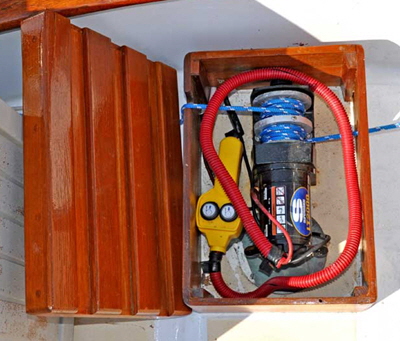 There is now only a single line leading down from each davit to the dinghy in the water below, so it is necessary to weight the lines so they will self-feed off the winch. I drilled out the center hole in two heavy fishing weights then half-hitched one to each lifting line that easily weighted them down to the water as the line unwound from the winch.
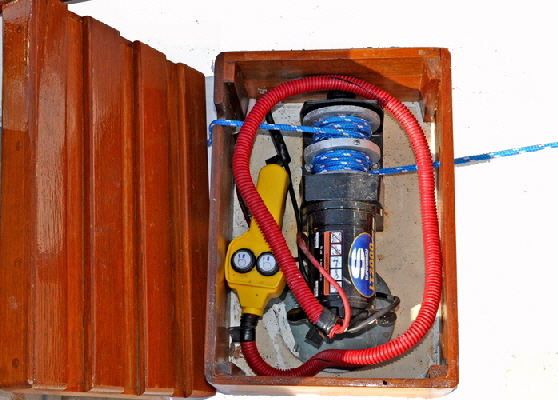
 Being open to the elements on the stern I’m sure the winch would not have looked good for very long. So I enclosed it along with its remote control in a teak box with removable lid, with slots in the side for the lifting lines to pass through slots in the box.
Using swaging equipment at my local marine shop I made two stainless wire strops with thimbles and snap shackles and shackled them to the ends of the davits. These are hooked to the dinghy strops when it is fully hoisted as a safety measure. The winch can then be backed off slightly to take the strain of the lifting lines.
“So what if power fails or the winch fails?” Fair question. I kept the original blocks and tackles handy and they can easily be shackled back on the davits to handlel the dinby hand. It hasn’t happened yet and the tackles remain useful as ‘Handy Billys.
That’s now another job the wife can easily do on her own while I have a beer…and which always attracts amazed onlookers whenever we use our dinghy elevator.